

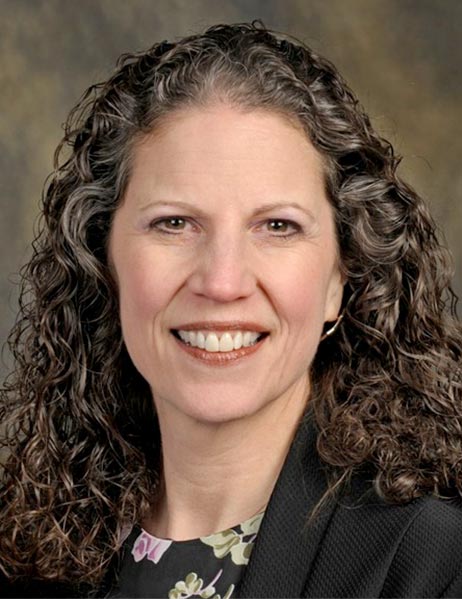
Terri Susan Fine, Ph.D.
Terri Susan Fine, Ph.D., is professor emeritus of political science and associate director emeritus of the Lou Frey Institute at the University of Central Florida. Her passion for civic education stems from her belief that informed citizenship best supports civil society. Her teaching experience includes American government and politics, civil rights, religion and politics, women and politics, voting and elections, and U.S. constitutional ideals. Her Lou Frey Institute work supports middle and high school social studies teachers as they navigate Florida’s civic education and civic literacy requirements. She also served as the civics consultant to the Florida Commissioner of Education Task Force on Holocaust Education. In addition to receiving 10 UCF teaching awards, she also received two statewide awards from the Florida Council for the Social Studies and two community relations awards from the Jewish Federation of Greater Orlando.
INCLUDE
The Four Promises of the U.S. Declaration of Independence
The U.S. Declaration of Independence and Jewish Issues (series or stand-alone)
The Purpose And Impact Of The U.S. Declaration Of Independence
This presentation will explore the long-term impact of the American colonists’ decision to declare independence from the British king in 1776. The U.S. Declaration of Independence, along with political commentaries that shaped it, will be examined. A focus on why the colonists declared independence, and how those viewpoints have shaped historical and contemporary political debates, will also be discussed. The session will conclude with a focus on ways that issues described in the U.S. Declaration of Independence have impacted international affairs.
The U.S. Declaration Of Independence And The Promise Of Unalienable Rights (‘Life, Liberty And The Pursuit Of Happiness’) For Jewish People
How has the U.S. Supreme Court ruled First Amendment issues concerning Jewish people? This session will examine the six protections included in the First Amendment focusing on several cases involving challenges by Jews claiming that their First Amendment rights have been denied to them. Other efforts by Jews to ensure their religious freedom by exercising their First Amendment rights will also be discussed. The session conclude with a focus on how the U.S. Supreme Court has ruled on questions about the U.S.-Israel relationship.
The U.S. Declaration Of Independence And The Promise Of Equality For Jewish People
What is the Enlightenment philosophy of political equality that informed the writing of the U.S. Declaration of Independence? This presentation focuses on two issues concerning Jewish people challenging the U.S. government to guarantee equality including President Theodore Roosevelt’s response to 19th century pogroms in Russia and President Franklin Roosevelt’s response to the Holocaust in Europe.
The U.S. Declaration Of Independence And The Promise Of Consent Of The Governed For Jewish Americans
This presentation focuses on three ways that the U.S. Declaration of Independence promise that government should guarantee consent of the governed is experienced by Jewish people. Political and electoral characteristics of American Jews will provide the landscape through which we will examine the conditions that have supported Jews being elected to Congress. The session will conclude by considering the conditions that will support the election of a Jewish president.
Comparing The U.S. Declaration Of Independence And Israel Declaration Of Independence
What does the “right to revolution” mean in the context of the U.S. Declaration of Independence? The Declaration of Independence has served as a model for the establishment of other democracies including Israel in 1948. We will examine the reasons why Israel declared independence as well as President Truman’s response to Israel’s decision to declare independence. Other aspects of Israel’s political independence including an analysis of Israel’s flag and national anthem (Hatikvah) will be discussed.
The U.S. Declaration of Independence And American Women
The U.S. Declaration Of Independence And Women’s Issues
What are the flashpoints in U.S. history that are organized around the four promises of the U.S. Declaration of Independence? Using primary sources, political commentary, visuals and statistics, this session will examine how women pursued economic, social and political equality, and the result of those efforts. The session will also focus attention on the barriers that women have faced in their efforts to experience the promises of the Declaration of Independence.
Jews and Judaism in American Politics
Jewish Women In American Politics: Triple Minorities In American Politics
What are the three key barriers that Jewish women face in their efforts to seek and secure elected office? These barriers, individually and together, limit Jewish women’s opportunities. An examination of Jewish women’s electoral experience, including the conditions that have supported their success, will be presented. The presentation will conclude by focusing on the impact that Jewish women have had on policymaking.
The Legacies of Louis Brandeis and Ruth Bader Ginsburg
How did Louis Brandeis, the first Jewish person serving on the U.S. Supreme Court, and Ruth Bader Ginsburg, the first Jewish woman to serve on the U.S. Supreme Court, challenge religious and political barriers? The session will focus on Brandeis’ and Ginsburg’s family backgrounds and their legal careers before being nominated to the U.S. Supreme Court including key cases that each presented to the U.S. Supreme Court. The session will also focus on the nomination and confirmation of each justice.
The U.S. Supreme Court And U.S. Foreign Policy Toward Israel
This presentation will focus attention on the conditions that led up to the U.S. Supreme Court decision in Zivotovsky v. Kerry (2015). This case examined role of U.S. presidents shaping and representing national interests when conducted foreign policy toward Israel. The session will consider how the U.S. Constitution and federal laws have used cited to both justify and challenge the president’s role conducting U.S. foreign policy toward Israel.
U.S. Supreme Court Decision Making, The First Amendment, And Jewish Issues
How have the two First Amendment religion clauses (guaranteeing the free exercise of religion, forbidding the establishment of religion) been used by Jews to challenge government decision making before the U.S. Supreme Court? This session will discuss the case background, key arguments, outcomes and majority and minority opinions of Supreme Court cases that have shaped and clarified Jewish religious rights in the United States.
Will there be a Jewish President in our Lifetime?
What are the conditions that will support a Jewish person to be elected president? This session will review how the U.S. Constitution and various aspects of political participation and public opinion create opportunities for Jews to seek and secure the presidency. Once these conditions are presented, case studies and statistics providing context to better answer this question will be shared.
Nice Jewish Girls: A Celebration Of Jewish Women Through The Ages
Jewish women have played central roles in Jewish life since the early days of the Torah. This presentation will focus on four well-known Jewish women whose efforts have shaped Jewish, American and Israeli history. These women will include Miriam, Moses’ sister, who saved her younger brother from certain death in Egypt, Golda Meir, who was instrumental in the establishment of the State of Israel and would later became the only woman to serve as Israel’s prime minister, Ruth Bader Ginsburg, the first (and only) Jewish woman to serve on the U.S. Supreme Court and Henrietta Szold, who founded Hadassah. These Jewish women’s legacies continue as current and future generations of Jewish women are inspired by their example.
Holocaust Education
How did the Holocaust Education movement reflect other historical movements such as the Civil Rights Movement? How has the United States government responded to calls for Holocaust education? The session focuses on how Holocaust education is one component of national and state-level education policy, supporting participants’ understanding and appreciation for how and why Holocaust education emerged in the 20th century. Focusing on Florida, we will examine the state’s Holocaust education mandate, how that mandate came about, and the ways that the state government continues to support Holocaust education.
Holocaust Education in the United States and Florida (two-part series or stand-alone sessions):
Holocaust Education in Florida
Teaching the Holocaust has been required in Florida’s public schools for over 30 years, yet the implementation of that requirement has faced many challenges. What does the state of Florida require that students be taught about the Holocaust, and what are the barriers to teaching K-12 students about the Holocaust since Holocaust education was mandated in Florida? Changes to the Holocaust education requirements that took effect in 2023 will also be discussed.
Holocaust Education in the United States
What was the motivations for the Holocaust education movement in the United States and how are Holocaust education mandates are experienced across the country. The session will provide an overview of Holocaust education across the United States as well as what these states require. The presentation will also include the factors that impact whether a state will mandate Holocaust education and the implications of these factors such as diverse perspectives on the context in which the Holocaust is mandated and taught.
Political Participation
Voting and Election Law in the United States and Florida
What are the key legal and constitutional factors that influence elections and voting in the United States and Florida? The session will focus on election law and how those laws impact political participation. An examination of federal legislative and constitutional requirements that shape voter turnout will inform why voter turnout is higher among members of some groups compared with others. Comparing the laws and constitutions of the United States and Florida will give the audience insights as to why and how electoral participation in Florida is similar to and different from other states.
Citizenship Issues: Constitutional, Legislative And Political Considerations
The U.S. Constitution requires that the U.S. president be a natural born citizen although the Framers of the U.S. Constitution failed to define citizenship. It was not until 1868 that citizenship was defined by the 14th Amendment although contemporary debate has emerged about its interpretation. This session will focus on key citizenship Supreme Court debates and contemporary citizenship issues.
Debates About Representation, Or Why Is Gerrymandering So Controversial?
Representation concerns have been raised since the writing of the Declaration of Independence. These concerns have focused, in part, on how legislative districts are drawn. This session will include a focus on Supreme Court and state legislative debates about redistricting (gerrymandering) and discuss how proposals for Puerto Rico and Washington, D.C. establishing statehood will impact representation in Congress.
The Death Penalty: Constitutional and Political Considerations
The Eighth Amendment to the U.S. Constitution denies to the federal government the power to impose “cruel and unusual punishment”. While the death penalty is not identified in the U.S. Constitution or its amendments, Eighth Amendment challenges have been largely organized around the death penalty. This session will focus on how the U.S. Supreme Court has interpreted the circumstances under which the death penalty is deemed acceptable and the impact of those judicial decisions on the application of the death penalty at the federal and state levels. Political considerations, such as public opinion toward the death penalty and how the death penalty has shaped elections campaigns, will also be addressed in the presentation.