

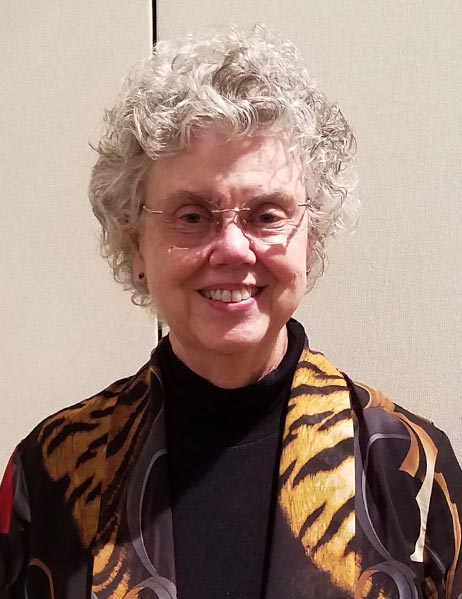
Rebecca Staton-Reinstein
Rebecca Staton-Reinstein, PhD, inspires, informs, and involves your audience with insights from US founders. As a Virginian, whose parents were history lovers, Rebecca absorbed their enthusiasm as they visited historical sites. As a William & Mary student, she worked for Colonial Williamsburg as a costumed guide, interpreting the rich saga of the Revolution. She published “Conventional Wisdom: How Today’s Leaders Plan, Perform, and Progress Like the Founding Fathers,” weaving together the insights of modern leaders with those of framers of the U.S. Constitution. Rebecca’s message to her audiences focuses on the leaders of the 18th and 19th century as humans with strengths and weaknesses, who created a remarkable legacy for us, “a republic, if we can keep it,” as Ben Franklin remarked.
INCLUDE
Declaring Independence: Breaking With The Most Powerful Nation On Earth
When the Committee of Five reported out “The Unanimous Declaration of the 13 United States of America,” to the Second Continental Congress, June 28, 1776, we were a divided nation with a significant minority loyal to the British. Thomas Jefferson wrote the first draft, which was amended by John Adams, Ben Franklin, Robert Livingston, and Roger Sherman. After serious discussion, Congress approved the document, July 4. The document did not spring out of thin air or the thoughts of one person. The major ideas derived from the dominant political philosophy of the day, The Enlightenment. Learn how this critical founding document came into existence. The fundamental elements are still debated, discussed, and dissected.
Thomas Jefferson: Enlightenment Evangelist, Enigma, And Ever Controversial
Everyone knows Thomas Jefferson penned the Declaration of Independence. More recently, many people have discovered what his contemporaries knew; he fathered children by one of his enslaved people. But what else was going on with this scion of a rising Virginia family, this always curious scientist and inventor, this architect and world traveler? Jefferson befriended and then fell out with most of the main characters of the revolution and early republic, except for James Madison. His contemporaries praised him for his brilliance and fervor and condemned him as an atheist and traitor. He embodied a host of contradictions and found it easy to embrace two opposing opinions at once. Discover what makes him our most fascinating and controversial founder.
“Great Little Madison:” How A Diminutive, Sickly Man Conspired To Overthrow The Government And Give Us Our Quintessential Founding Document
James Madison, who was small in stature and suffered from ailments all his life, was large in intellect and devoted to creating a healthy government for the newly united states. His future wife, called him the “Great Little Madison” as she swooned over their first meeting. Madison was a scholar of constitutions and organized the framework for the one presented to begin the Constitutional Convention. He was a master legislature and worked as the whip to pass Washington’s agenda during his first term. He authored many of the essays appearing in that peerless political work, The Federalist. Yet he took up the causes of nullification, removing slaves to Africa, and the embargo. Learn why we owe this complex man a debt of gratitude at the same time we see his human flaws.
George Washington: Man, Myth, And Much More
As children, we learned George chopped down the cherry tree and could not tell a lie. As grownups, we learned this was a made-up story. But much of what this quintessential founding father did is lost to most of us. Discover how his early experiences as a militiaman and planter dealing with London brokers shaped his thoughts about our colonial rulers. Learn how the least formally educated of the founders forged his character through reading, thinking, and self-discipline. Meet the man with no children of his own, who “adopted” sons including Alexander Hamilton and the Marquis de Lafayette. See how he shaped the presidency to reflect his enlightenment approach to government.
Ben Franklin: Jack Of All Trades, Master Of Most!
Ben Franklin was much more than that avuncular fellow in the paintings. Before the Revolution he was the only American most Europeans had ever heard of – the “inventor” of electricity. He convinced the French to support the rebels with ships, leaders, soldiers, and money despite John Adams’ scathing criticism. He treated his biological family poorly while lavishing warmth and affection on others. He was ambitious, wily, brilliant, civic-minded, inventive, charming, and much more. He evolved from a young man on the rise to an elder statesman and left a legacy we need to appreciate.
Conventional Wisdom: How We Ended Up With Our Constitution And The Struggles To Bring It Into Existence
When representatives of 11 of the 13 new states gathered in Philadelphia in the sweltering summer of 1787, they thought they were going to tweak the Articles of Confederation. They were thunderstruck day one when Virginia introduced a new Constitution, authored by James Madison. Four months later, after endless and often bitter debate, they emerged with a document that met with immediate opposition as well as praise. Follow the debates to create the document, ratify it, and form a new government. Understand the built-in tensions that propelled us toward Civil War and continue to keep us debating and moving forward today.
Constitutional Convention Day-By-Day: Endless Debate, Disgruntlement, Disillusion, And Decisions
When delegates arrived in Philadelphia in the summer of 1787, most thought they were going to spend a few weeks tinkering with the Articles of Confederation and return quickly to their law firms, plantations, businesses, and families. They were shocked the first day when the Governor of Virginia read out a plan which called for eliminating the Articles and proposing an entirely new form of government. Some delegates left, never to return. No wonder Patrick Henry had refused to go in the first place, saying he smelled a rat. Sit through that long hot summer with them as those who stayed hammered out our essential document. Enter the furious debates that still echo in today’s politics. Examine the compromises that are under scrutiny even today.